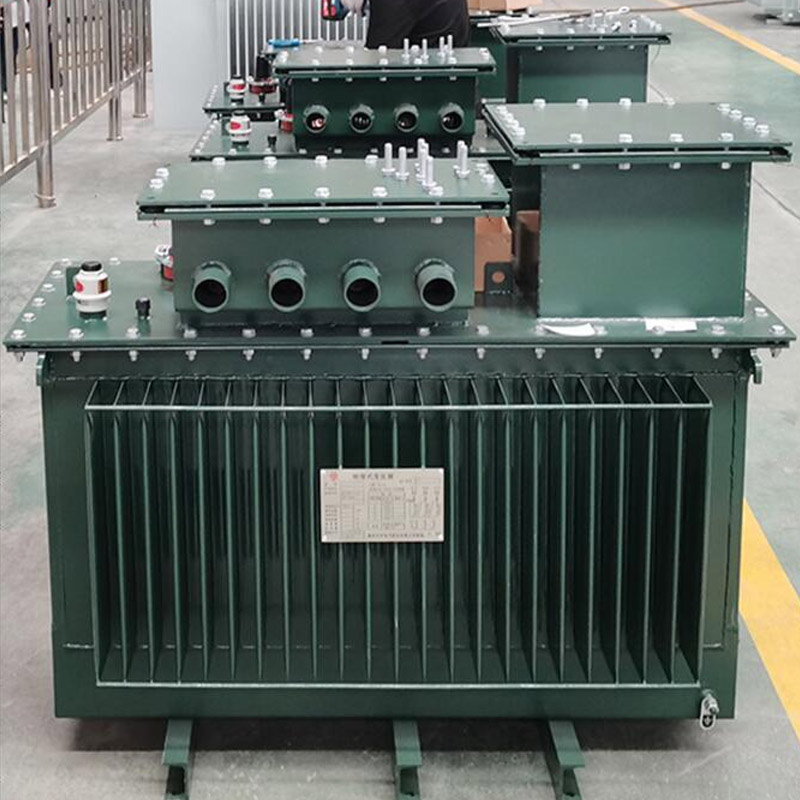
A power transformer is a static electrical device that transfers electrical energy between two or more circuits through the principle of electromagnetic induction. It is a critical component in power systems, enabling efficient transmission, distribution, and utilization of electrical energy by adjusting voltage levels while keeping the frequency constant (in most cases).
-
Voltage Transformation:
- Step-up transformers: Increase voltage for long-distance transmission. Higher voltage reduces current (by P=VI), minimizing power loss (I2R) in transmission lines.
- Step-down transformers: Decrease voltage to safer, usable levels for industrial, commercial, or residential applications (e.g., from 110kV distribution lines to 230V household supply).
-
Isolation:
They electrically isolate circuits (primary and secondary windings are not physically connected), enhancing safety and reducing interference.
-
Impedance Matching:
Optimize power transfer between circuits by matching the impedance of sources and loads, improving efficiency.
A power transformer consists of the following core components:
- Core: Typically made of laminated iron or steel sheets to minimize eddy current losses. It provides a low-reluctance path for magnetic flux.
- Windings (Coils): Conductive coils (usually copper or aluminum) wrapped around the core.
- Primary winding: Connected to the input (source) voltage.
- Secondary winding: Delivers the transformed output voltage.
- Tank: A protective enclosure (often filled with insulating oil) that cools the transformer and insulates windings.
- Cooling System: Oil-based or air-based systems to dissipate heat generated during operation (critical for efficiency and longevity).
- Insulating Materials: Paper, oil, or synthetic materials to insulate windings and prevent short circuits.
Power transformers operate on Faraday’s Law of Electromagnetic Induction:
- When alternating current (AC) flows through the primary winding, it creates a varying magnetic flux in the core.
- This changing flux induces an electromotive force (EMF) in the secondary winding.
- The ratio of primary to secondary voltage equals the ratio of their turns:VsVp=NsNp
Where Vp/Vs = primary/secondary voltage, and Np/Ns = primary/secondary turns.
Classified by use case, design, or phase:
- By Application:
- Distribution transformers: Step down voltage for local distribution (e.g., neighborhood transformers).
- Power transformers: Used in high-voltage transmission networks (e.g., 220kV to 500kV).
- Instrument transformers: Measure high voltages/currents (e.g., current transformers, voltage transformers).
- By Phase:
- Single-phase: For residential use (1-phase AC).
- Three-phase: For industrial and transmission systems (3-phase AC, more efficient for large power).
- By Cooling:
- Oil-immersed (most common for high power).
- Dry-type (air-cooled, used in indoor settings where oil is a hazard).
Without power transformers, efficient long-distance electricity transmission would be impossible. High-voltage transmission reduces energy loss, making it feasible to supply electricity from power plants (e.g., hydro, solar, or thermal) to distant cities and towns. They are thus the “backbone” of modern electrical grids.